The Journal · Technique
The Difference Between Thinning, Texturing and Slicing Scissors
They look alike on the trolley and do completely different jobs in the hand. How thinners, texturisers and slicing shears work — and when each one earns its place in your kit.

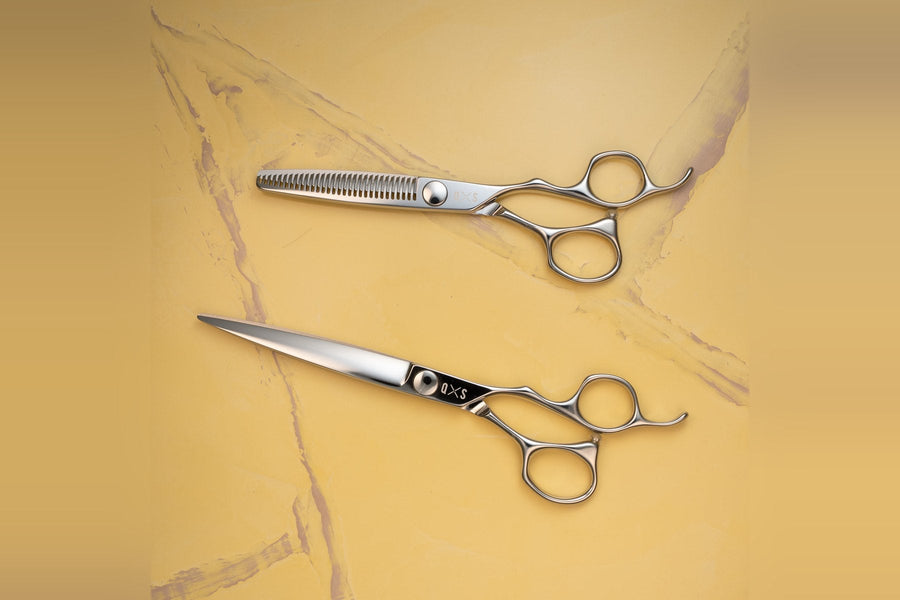
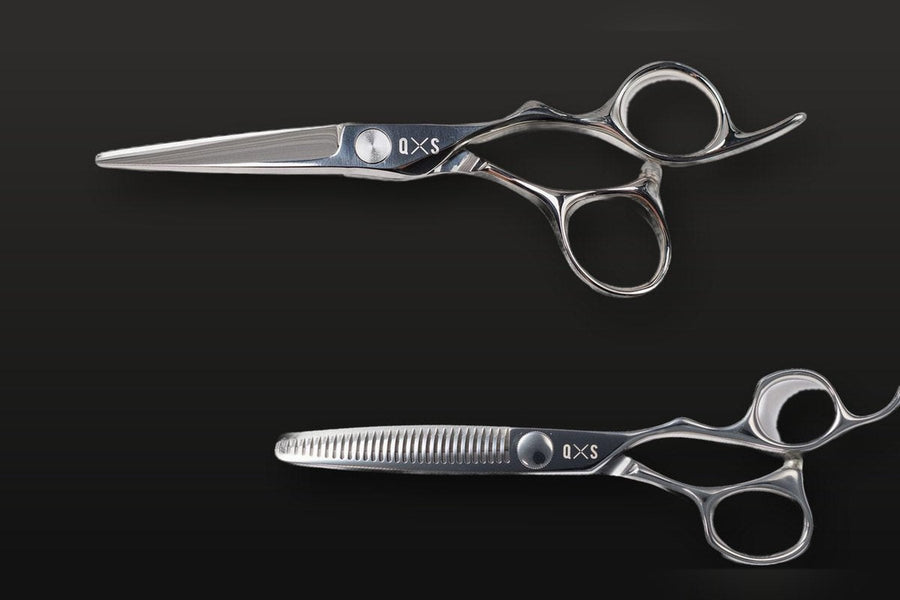
Lay a blender, a texturiser and a slicing shear side by side and a client would call them all “scissors”. In your hand they’re three different instruments: one hides weight, one shows texture, one carves movement. Knowing which is which is how you stop using one tool to do another’s job.
The short answer
Thinners (blenders) remove weight invisibly. Texturisers remove more per close and leave visible separation. Slicing shears are cutting shears built to glide along the hair, creating soft, feathered movement. Most kits need the first; many benefit from all three.
At a glance
| Thinner / blender | Texturiser / debulker | Slicing shear | |
|---|---|---|---|
| Blades | One toothed, one solid | One toothed (larger teeth), one solid | Two cutting blades |
| Result | Softer, lighter, no visible line | Visible separation, chunkier texture, real weight out | Soft, tapered, feathered ends and movement |
| Typical uses | Blending layers, softening lines, finishing | Thick hair, dense sections, textured tops | Slide cutting, slicing, point cutting |
| From our range | Vespucci, 303, Foundation Thinner, Pizarro No Line | Cabot, Vespucci Flip | Vasco, Vasco Swivel |
Thinning scissors (blenders)
One blade is solid; the other has teeth. When you close, only the hair that falls between the teeth is cut, so you take out a proportion of the hair without changing the overall length or shape. A blunted solid blade guides hair into the teeth softly, which is what gives a clean, line-free finish.
Use it for: blending layers, softening a heavy line, taking out internal weight, finishing. The Vespucci has 30 fully sharpened, non-serrated teeth for exactly that soft, invisible result.
Texturising scissors
Same principle, more appetite. Larger or more widely spaced teeth take out more hair with each close and leave visible separation and piece-y texture rather than a seamless blend. Reverse designs put the solid blade on your side for extra control.
Use it for: debulking thick or coarse hair, dense sections, textured crops and tops. The Cabot (30 large, tight-gapped teeth, reverse) removes medium-heavy weight with control; the Vespucci Flip (reverse, notched solid blade) is the finer refiner.
Slicing shears
Slicing isn’t a type of thinner — it’s a cutting technique. You glide a partly open blade along the hair to taper it, creating soft, graduated ends and movement. It needs a very smooth, very sharp convex edge, and ideally a blade designed for it.
The Vasco is our dedicated slicing shear. Its dynamic blade is blunted through two-thirds of its length and sharpened at the tip, so it glides without grabbing, while fully sharpened tips still handle precise point cutting. Want it on a swivel? That’s the Vasco Swivel.
Blenders hide weight. Texturisers show texture. Slicing shears create movement. Use each on purpose and you’ll rarely need to rescue a cut.
Do you need all three?
- Start with a cutting shear and a blender. That covers the majority of cuts.
- Add a texturiser if you see a lot of thick, coarse or dense hair, or cut textured crops.
- Add a slicing shear when slide cutting becomes a regular part of your work, especially on longer hair.
The Pro Duo (Polo + Vespucci) is a complete starting pair. Explore more in Bundles & Kits, or read our thinning scissor guide.
Questions we get asked
Can I slide cut with a normal shear?
You can with a sharp convex edge, but a dedicated slicing shear is far more forgiving and much less likely to grab.
Is a texturiser the same as a thinner?
They work the same way, but a texturiser takes out more hair per close and leaves visible texture; a thinner blends it away.
What’s a reverse thinner?
One with the blades inverted, so the solid blade faces you. Many people find it more natural for refining and point cutting.
Dan Wild · Founder, Quartered Steels · Belfast