The Journal · Buying Guide
How to Choose Your First Professional Scissors as a Trainee Stylist
Your first professional shears shape your habits for years. What to look for, what to avoid, and why a matched cutting-and-thinning pair is the smartest way to start.

Your first professional shear will teach your hands how cutting should feel. Buy one that folds hair and strains your wrist, and you’ll spend your training compensating for the tool. Buy the right one, and you’ll spend it learning to cut.
The short answer
Look for a named professional steel (440C as a minimum), a 5.5″ or 6.0″ length, an offset handle, and adjustable tension — and buy a thinner alongside it. That’s exactly what the Foundation Duo is.
Don’t buy the cheapest kit on the list
Budget shears are tempting when you’re training on a trainee’s wage. But soft steel dulls quickly, folds hair and makes simple techniques look harder than they are. You end up doubting your hands when it’s really the shear.
You don’t need to spend a fortune. You do need proper steel. 440C stainless is a genuine professional baseline, and it’s what our Foundation Series is made from, hardened to 58 HRC.
Your first-shear checklist
| Look for | Why |
|---|---|
| Named steel (440C or better) | Holds an edge through daily training and responds well to servicing |
| 5.5″ or 6.0″ | Long enough for most techniques, short enough to stay in control |
| Offset handle | Keeps your elbow down and builds good posture from day one |
| Adjustable tension | You’ll learn to set it yourself — a skill for life |
| Left-handed option if you need it | A true left-handed shear, not a right-hander you fight all day |
| A matching thinner | Almost every course and every salon floor will need one |
5.5″ or 6.0″?
If you have smaller hands, or you’re drawn to precision, wet cutting and detail, start at 5.5″. If you have larger hands or you’re heading towards longer hair and bigger sections, 6.0″. Either is a versatile first shear. Hold one with your fingers in the rings: the tip should reach roughly the middle of your fingers when the blade rests along your palm.
Start with good habits
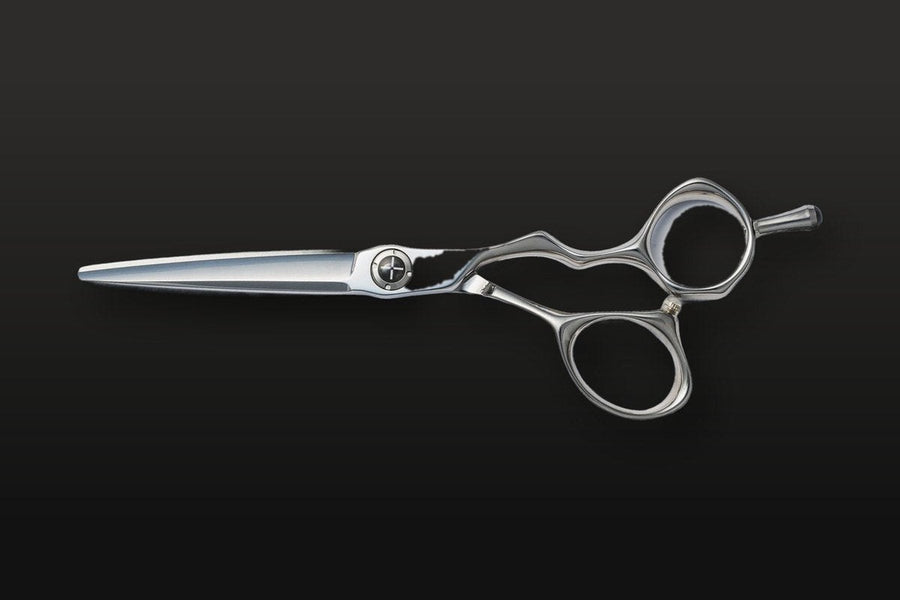
An offset handle drops your thumb and elbow into a natural position, which matters most when you’re cutting for hours and building muscle memory. The habits you form now — posture, tension, daily care — you’ll carry for your whole career.
Buy the shear that lets you learn to cut, not the shear you have to learn to cope with.
The Foundation Series: built for exactly this
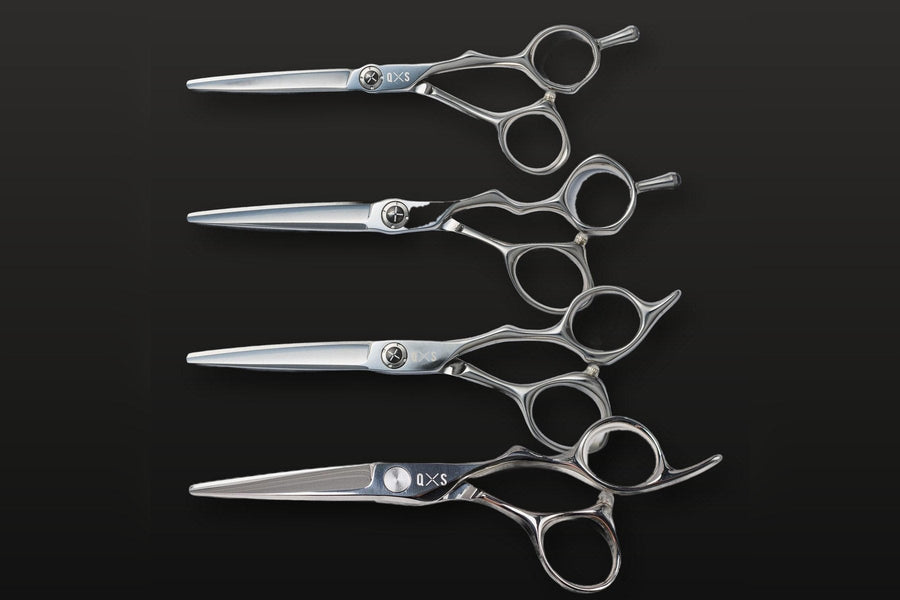
We designed the Foundation Series to be the first professional shears people never regret buying.
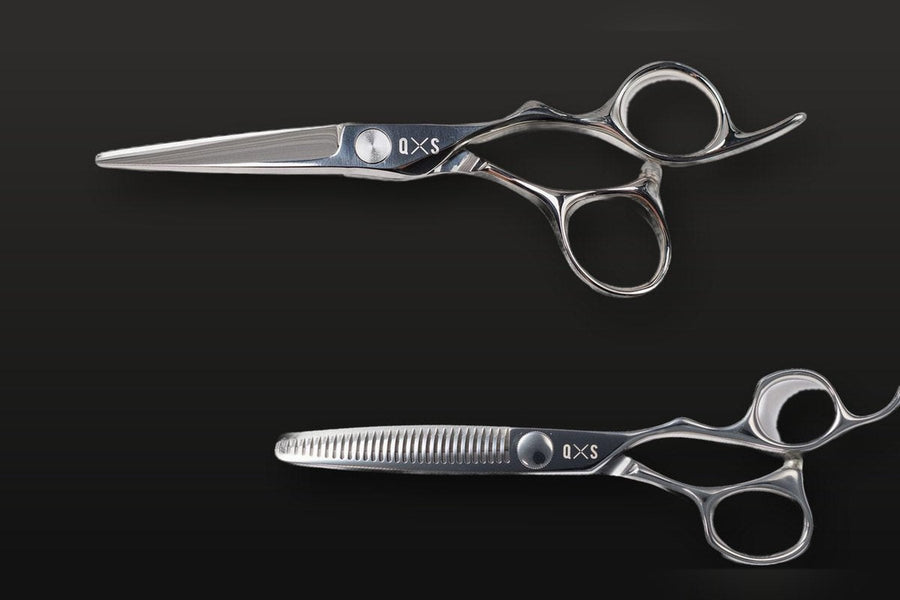
- The Foundation — 440C at 58 HRC, slight offset handle with a removable tang, hand-adjustable ball-bearing tension. 5.5″ or 6″, right or left handed.
- The Foundation Thinner — 30 tri-serrated teeth for controlled, forgiving blending, in the same steel and handle.
- The Foundation Duo — both together, matched, at better value than buying separately.
Look after them from day one
Wipe after every client, oil the pivot every evening, keep them closed in a case and never leave them in barbicide overnight. Our care routine takes two minutes a day.
When to upgrade
Once you’re qualified and on the floor full-time, you’ll know your techniques and what you want from a shear. That’s when to look at the Master Series in VG10 or the technique-specific X Series. Your Foundation pair won’t retire, though — it becomes your trusted second set.
Questions we get asked
Will the Foundation Duo cover my course?
Most courses ask for a cutting scissor and a thinning scissor — that’s exactly what the Duo is. Check your course kit list to be sure.
Do you make left-handed Foundation shears?
Yes, both the Foundation and the Foundation Thinner come in left-handed versions.
What warranty do I get?
Every Quartered Steels pair has a lifetime warranty on parts. It doesn’t cover wear or damage from use.
Welcome to the trade.
Dan Wild · Founder, Quartered Steels · Belfast