The Journal · Technique
Point Cutting vs. Blunt Cutting — When to Use Each Technique
Structure or softness? When to cut a clean, heavy line, when to break it up with the tips — and how the right shear makes both techniques easier.

Blunt cutting builds the architecture. Point cutting lets the building breathe. Nearly every great cut uses both — the skill is knowing where one should end and the other begin.
The short answer
Blunt cut when you want a strong, clean line with maximum weight at the ends — bobs, one-lengths, fringes, perimeters. Point cut when you want to soften that line, remove weight from the ends and add movement. Most cuts are blunt first, point second.
Blunt cutting
You close the blades straight across the section, cutting every hair at the same point. The result is a crisp, defined line with the most weight and density at the ends — which is also why blunt cutting makes fine hair look thicker.
Reach for it when:
- You’re building a bob, a one-length or a strong perimeter
- You want fine hair to look fuller
- You’re cutting a precise fringe
- The style depends on a clean, graphic shape
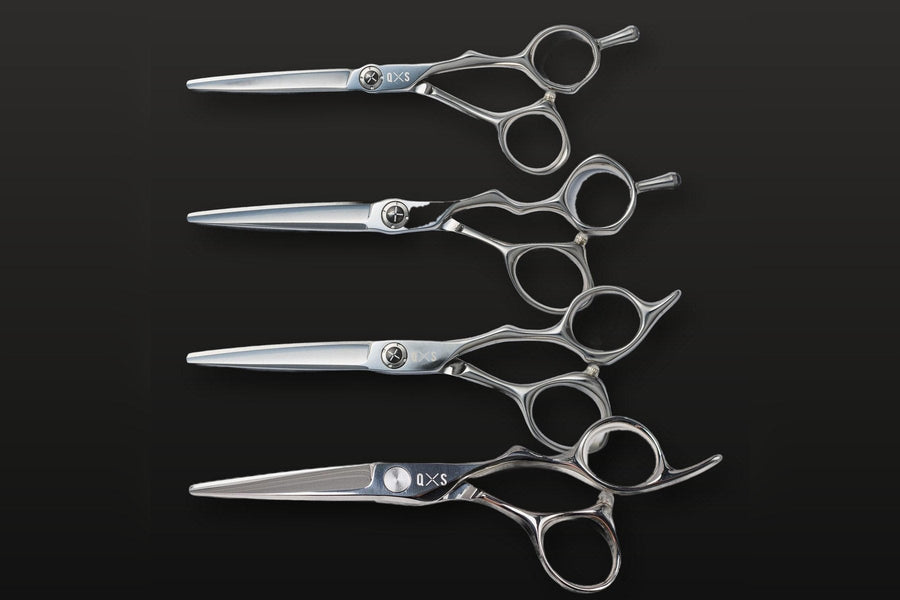
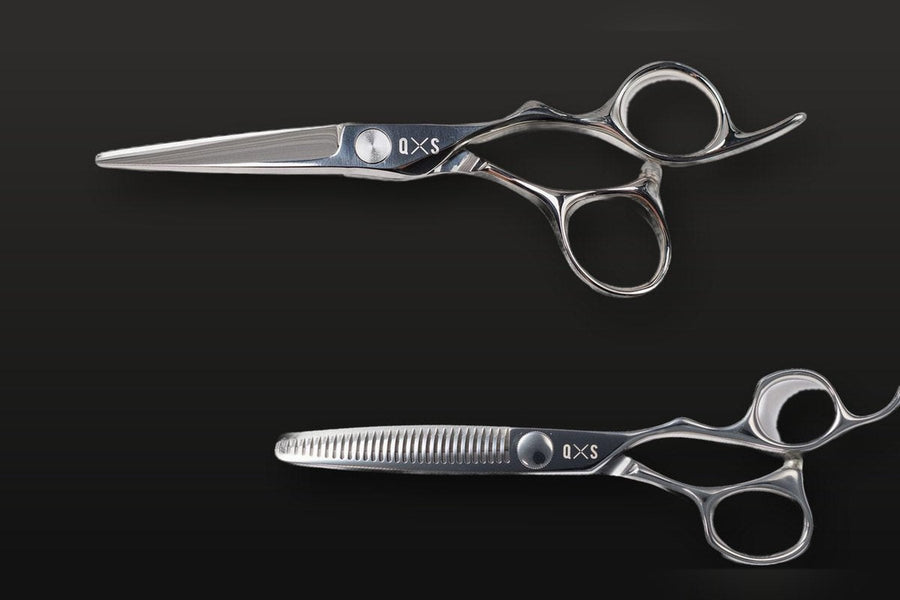
The shear: a firm, stable blade with a little bite helps hold the hair still and gives a crisp line. The Dias is built for dry cutting, blunt cutting and strong lines; The Soto (5.0″, semi-convex) brings the same crispness to detail and perimeters; and the super-sharp sword blade of the Master Craft carries a clean line through longer sections.
Point cutting
You turn the shear so the tips point into the ends and cut small notches rather than a straight line. Depending on the depth and angle, you break up the edge, remove weight from the ends and create a softer, more lived-in finish.
Reach for it when:
- A blunt line looks too heavy or too “done”
- You want movement and separation at the ends
- You’re personalising the shape to how the hair falls
- You want to take out weight without losing length
The shear: precise, sharp tips give you control over depth. The Erikson’s ultra-slim convex blade was designed for intricate point cutting and detail, and the tapered blade of the Master Precision narrows to a refined tip.
| Point-cutting depth | What it does |
|---|---|
| Shallow, near vertical | Softens the edge while keeping the line |
| Medium, at an angle | Removes weight from the ends, adds movement |
| Deep, more horizontal | Strong texture and separation — use with care |
Point cutting with dull tips doesn’t soften a line — it chews it. Technique only looks as good as the edge allows.
Using both in one cut
- Blunt cut the shape. Establish length, perimeter and balance with clean lines.
- Check it dry. See how the hair actually falls.
- Point cut to personalise. Soften the perimeter, lift weight from the ends, add movement where the hair wants it.
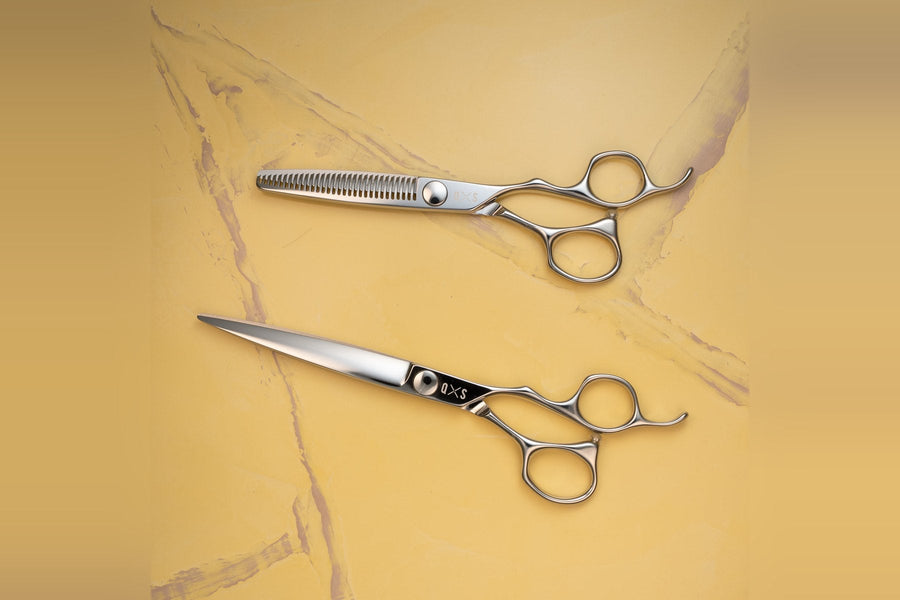
- Blend if needed. A blender such as the Vespucci or 303 Thinner smooths out any remaining weight line.
What about slide cutting?
Slide cutting is point cutting’s long-haired cousin: you glide a partly open blade along the section to taper it. It needs a dedicated convex blade — see thinning, texturing and slicing explained.
Questions we get asked
Can I point cut with any shear?
You can, but fine, sharp tips give far more control. A shorter shear (5.0″–5.5″) is also easier to manoeuvre.
Does blunt cutting damage hair?
Not with a sharp shear. With a dull one, any technique crushes the ends — see why your scissors might be damaging hair.
Which is better for fine hair?
Blunt cutting keeps fine hair looking fuller. Point cut lightly, if at all.
Dan Wild · Founder, Quartered Steels · Belfast