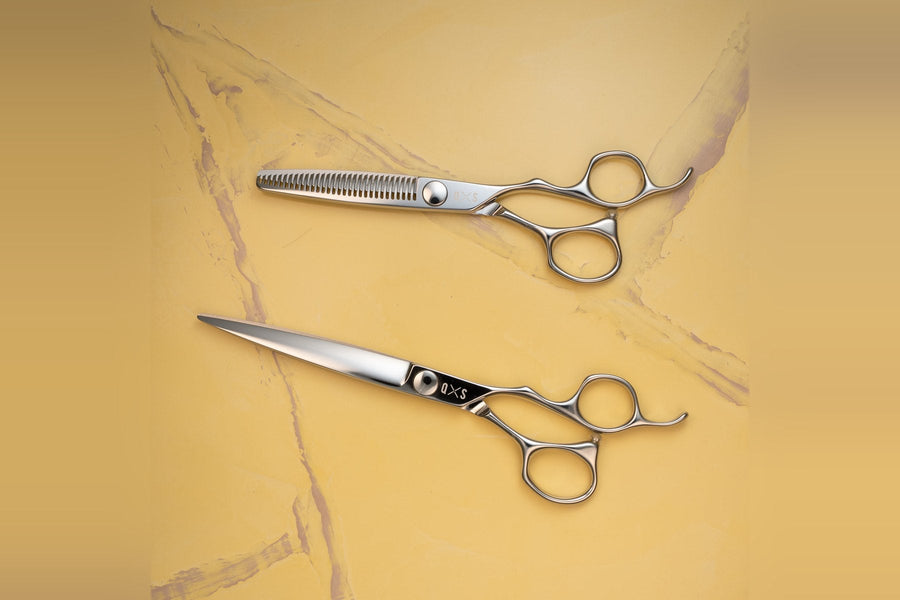
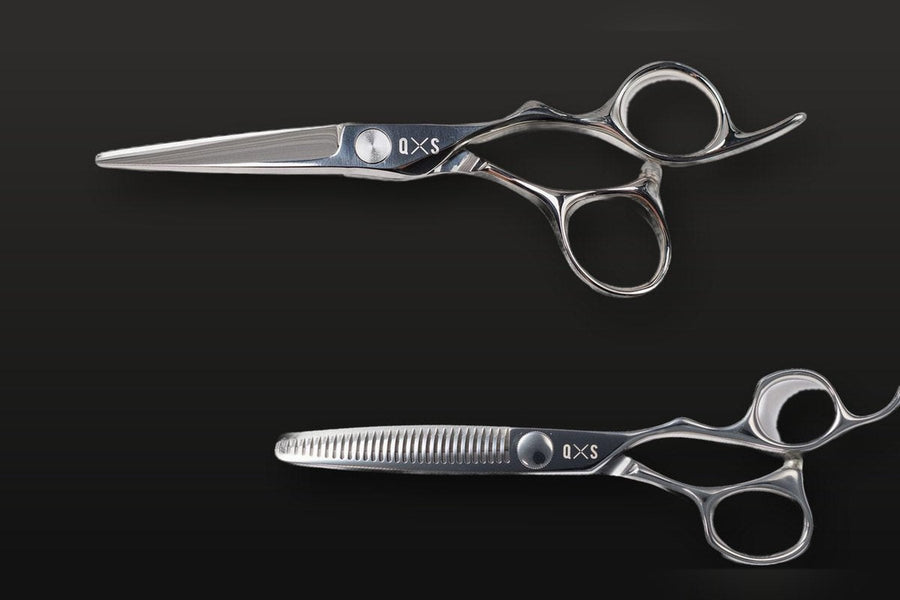
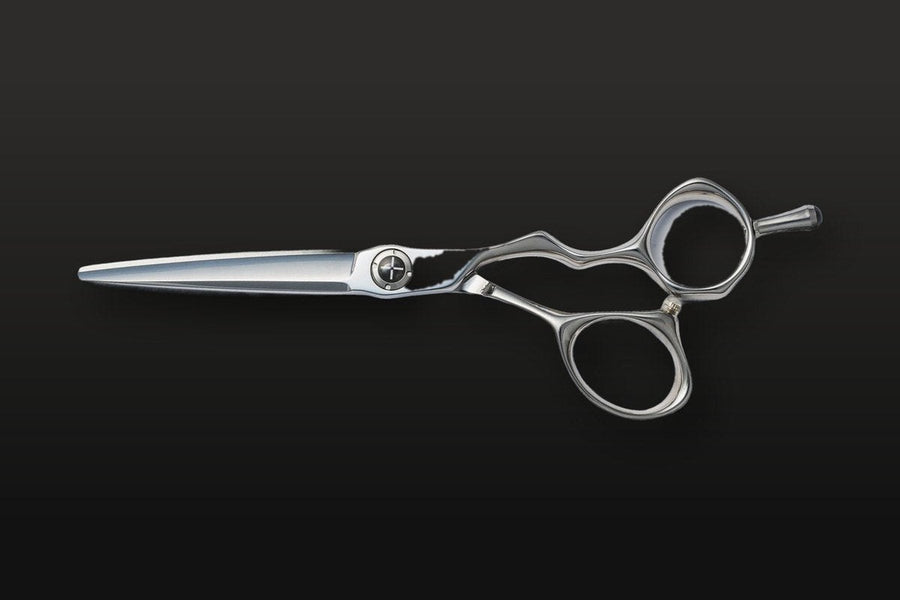
The Journal · Buying Guide
Why Professional Scissors Are Worth the Investment
Affordable luxury isn’t a contradiction — it’s maths. The real cost of a cheap shear, what you actually get from a professional one, and the cost-per-cut sum every stylist should do once.

There’s a moment every stylist knows: the first cut with a genuinely good shear. The hair doesn’t push. Your hand doesn’t work. The line just… appears. After that, cutting with anything less feels like writing with a blunt pencil. That feeling isn’t a luxury. It’s the whole job, done properly.
The short answer
A professional shear cuts cleaner, lasts far longer, protects your hand and your clients’ hair, and — spread over the thousands of cuts it will make — costs pennies per client. A cheap shear costs you in replacements, servicing, fatigue and finish.
The real cost of a cheap shear
- It dulls fast. Soft steel loses its edge quickly, so it folds hair and needs attention more often.
- It works you harder. A duller edge and poor tension mean more pressure on every close — thousands of times a week.
- It shows in the hair. Crushed ends split sooner, and clients notice their hair before they notice your technique.
- It doesn’t last. Replace it every year or two and the “saving” is gone.
What you actually get from a professional shear
Steel you can name
Professional steel takes a finer edge and holds it for longer. We name ours on every shear: 440C at 58 HRC in the Foundation Series, VG10 at 59 HRC in the Master Series, and AG-16 Cobalt Alloy across the X Series.
An edge built for a technique
Full convex for slicing and soft ends, semi-convex for bite and clean lines, a sword blade for long, controlled cuts. A professional range lets you choose the edge that fits how you work.
A mechanism that stays put
Ball-bearing tension systems keep the action smooth and your setting consistent, day after day.
A handle that looks after you
Offset handles, contoured thumbs, smaller finger rings and — on our swivels — a rotating thumb ring that keeps your elbow down at any angle. Comfort is not a nice-to-have when you close a shear this many times a day.
Do the cost-per-cut maths
Take the price of the shear and divide it by the cuts it will make. A full-time stylist doing around 30 clients a week, 46 weeks a year, cuts roughly 1,400 heads a year. Over five years of properly serviced work, that’s around 7,000 cuts.
| Shear price | Cuts over five years | Cost per cut |
|---|---|---|
| £119 | ~7,000 | under 2p |
| £199 | ~7,000 | under 3p |
| £279 | ~7,000 | about 4p |
Illustrative figures. Your numbers depend on your column — but the point stands at almost any volume.
I wanted shears that felt like a luxury — without a luxury price. So we made them.
Where to start
- Training or upgrading from budget shears: the Foundation Series — genuine professional steel at an honest price.
- Cutting full-time: the Master Series in VG10 for refined comfort and a longer-lasting edge.
- Want a shear built around your technique: the X Series.
- Not sure? Read How to Choose the Right Professional Hairdressing Scissors and use the 30-second shear finder.
Protect the investment
A professional shear lasts years if you let it: wipe it after every client, oil it every evening and have it serviced at least every six months. Every Quartered Steels pair carries a lifetime warranty on parts, and our sharpening service will keep it cutting like the day you bought it.
Questions we get asked
How long does a professional shear last?
Looked after and serviced regularly, many years. The steel, the care and the servicing all matter.
Is the most expensive shear the best?
The best shear is the one that matches your hand and your technique. Price follows features; fit follows you.
Are shears a business expense?
For many self-employed stylists they are. Check with your accountant for your own situation.
Over 20,000 pairs in working hands, and counting.
Dan Wild · Founder, Quartered Steels · Belfast