The Journal · Buying Guide
The Best Professional Thinning Scissors for Stylists in 2026
Blenders, refiners, reverse thinners and debulkers — what each one actually does, how to read tooth count and blade design, and which Quartered Steels thinner belongs in your kit.

The thinner is the most misunderstood tool in the kit. Used badly, it’s how a good cut gets holes in it. Used well, it’s how a good cut starts to move. The difference is almost always choosing the right one for the job — and then trusting it to take less than you think.
The short answer
For invisible, everyday blending choose a 30-tooth blender with a blunted solid blade. For heavy, dense hair add a debulker with larger teeth. If you like to see the solid blade while you work, choose a reverse thinner. And don’t skimp on steel: this is a tool you close hundreds of times a day.
What to look at before you buy
Tooth count and tooth shape
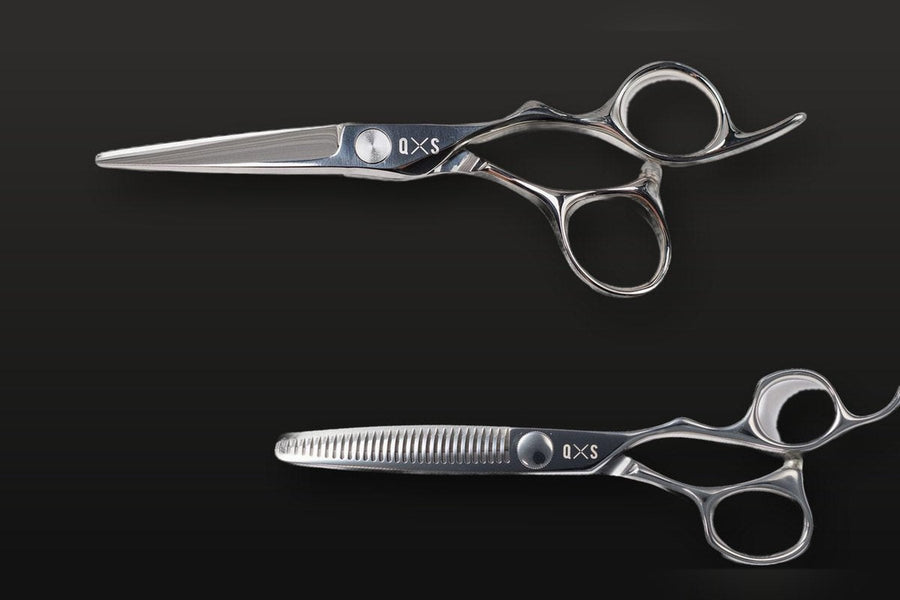
Tooth count alone doesn’t tell you how much hair comes out — the width of the teeth and the gaps between them matter just as much. As a rule of thumb, more, finer teeth give a softer, more invisible blend; fewer, larger teeth remove more weight per close. Sharpened teeth with no serrations cut cleanly and let hair slide; serrated teeth grip, which gives control and predictability.
The solid blade
A fully blunted solid blade pushes hair gently into the teeth without cutting it, which is what gives a blender its soft, line-free finish. A notched solid blade takes a little more with each close.
Standard or reverse
On a reverse thinner the blades are inverted, so the solid blade faces you and the teeth sit on the far side. It’s a preference, not a rule — many barbers and stylists find it more natural for point cutting and refining because they can see exactly where the blade is.
Steel
A thinner closes more often than any other tool you own. Better steel keeps every tooth sharp for longer, so it keeps cutting cleanly instead of chewing.
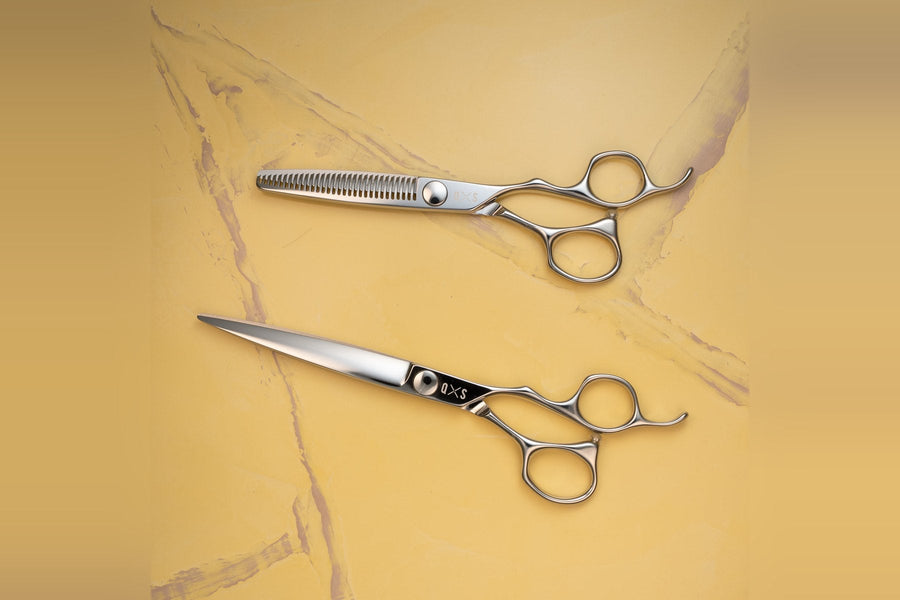
The Quartered Steels thinners, side by side
| Thinner | Series · steel | Teeth | Design | Best for |
|---|---|---|---|---|
| Foundation Thinner | Foundation · 440C, 58 HRC | 30, tri-serrated | Standard | Controlled, dependable blending — the ideal first thinner |
| 303 Thinner | Master · VG10, 59 HRC | 30, tri-serrated | Standard | Controlled, predictable weight removal, every day |
| Vespucci | X · AG-16 Cobalt Alloy | 30, fully sharpened, no serrations | Standard, blunted solid blade | Refining, soft blending, removing weight lines |
| Vespucci Flip | X · AG-16 Cobalt Alloy | 30 | Reverse, notched solid blade | Precision refining, point cutting, weight removal |
| Cabot | X · AG-16 Cobalt Alloy | 30, large-tooth, tight-gap | Reverse | Thick and coarse hair, dense sections, debulking |
| Pizarro No Line | X · AG-16 Cobalt Alloy | 30, sharpened J-shape, no serrations | Standard, blunted solid blade | No-line blending, erasing weight lines, finishing |
Which one is yours?
- Starting out, or want a reliable second thinner? The Foundation Thinner. Tri-serrated teeth grip, so it’s forgiving while your blending technique develops.
- Want that same control in a longer-lasting steel? The 303 Thinner in VG10.
- Want blending your client can’t see? The Vespucci, or the Pizarro No Line if you cut with a Pizarro.
- Prefer to see the solid blade? The Vespucci Flip.
- Fighting thick, coarse hair all day? The Cabot takes out real weight with control.
Thinners get a bad name because they’re used to hide mistakes. Used on purpose — for soft ends, internal weight and face framing — they’re one of the most creative tools you own.
Three habits that keep a thinner honest
- Stay out of the root area unless you mean it. Most holes are made within a few centimetres of the scalp.
- Close once, move, close again. Repeated closes in the same spot stack up faster than you think.
- Check dry. Wet hair hides how much you’ve taken. Blend lightly wet, refine dry.
Not sure where a thinner ends and a texturiser begins? Read The Difference Between Thinning, Texturing and Slicing Scissors.
Questions we get asked
What does “30-tooth” mean?
It’s the number of teeth on the toothed blade. On its own it doesn’t tell you how much hair is removed — tooth width, gap and shape matter just as much.
Serrated or non-serrated teeth?
Serrations grip the hair for control and consistency; non-serrated, fully sharpened teeth let hair glide for a softer, more invisible finish.
Do I need a cutting shear and a thinner from the same series?
You don’t have to, but matched pairs feel consistent in the hand. Our bundles pair them for you.
Dan Wild · Founder, Quartered Steels · Belfast