The Journal · Buying Guide
Best Scissors for Barbers vs. Hairdressers — What's the Difference?
Same steel, different jobs. Why barbers and hairdressers reach for different lengths, edges and handles — and the Quartered Steels shears built for each chair.

Stand a barber and a hairdresser side by side and you’ll see two different sports. One lives at the neckline with clippers, combs and inch-perfect detail. The other works through length, weight and movement, often for an hour at a time. Same craft, different demands — so the shear should be different too.
The short answer
Barbers usually want a shorter, stiffer shear with a bit of bite for detail and blunt perimeters, plus a longer blade for scissor-over-comb. Hairdressers usually want a 5.5″–6.5″ convex shear that can slide cut, and a thinner or blender for weight. Most of us, if we’re honest, end up doing a bit of both.
How the work differs
| Barbering | Hairdressing | |
|---|---|---|
| Typical hair length | Short to mid | Everything, often long |
| Signature techniques | Scissor-over-comb, blunt perimeters, detailing, texturising tops | Wet cutting, layering, slide cutting, point cutting, weight removal |
| Preferred lengths | 5.0″ for detail, 7.0″ for scissor-over-comb | 5.5″–6.5″ |
| Edge | Semi-convex bite for clean lines | Full convex for slicing and soft ends |
| Second tool | Texturiser or reverse thinner for the top | Blender or refiner for invisible weight removal |
The barber’s kit
Barbering rewards control. You’re working close to skin and ears, cutting against a comb, and you need the blade to do exactly what your fingers say.
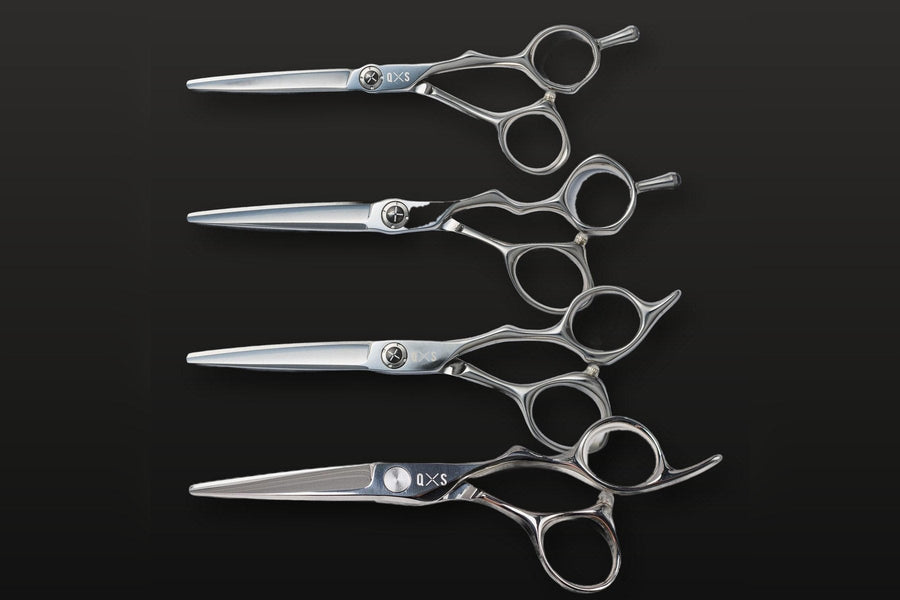
- For detail and perimeters: The Soto — a 5.0″ semi-convex shear with a classic zero-offset handle and a black titanium finish. Short, stiff and precise.
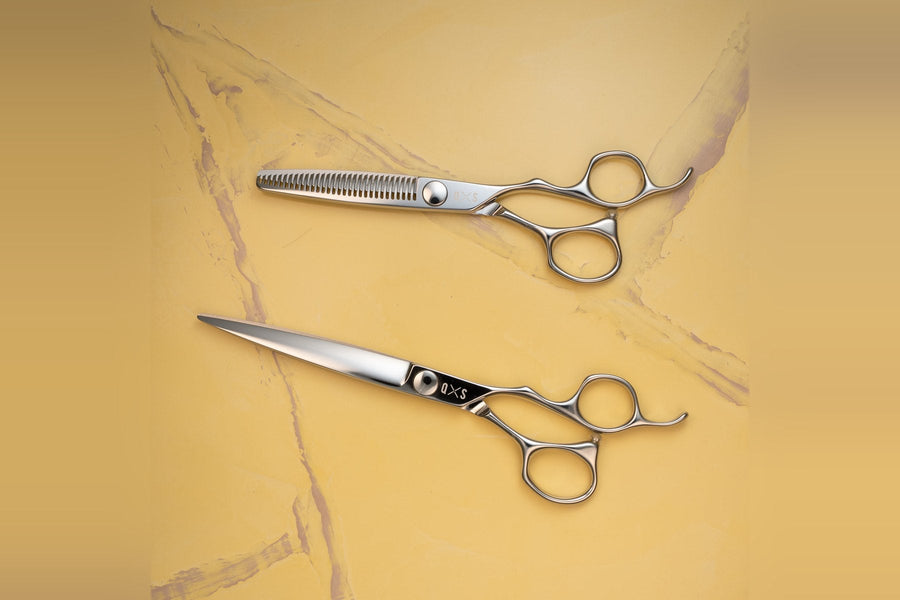
- For scissor-over-comb: The Columbus — 7.0″, full convex, with a reinforced spine so the blade stays true across a long pass.
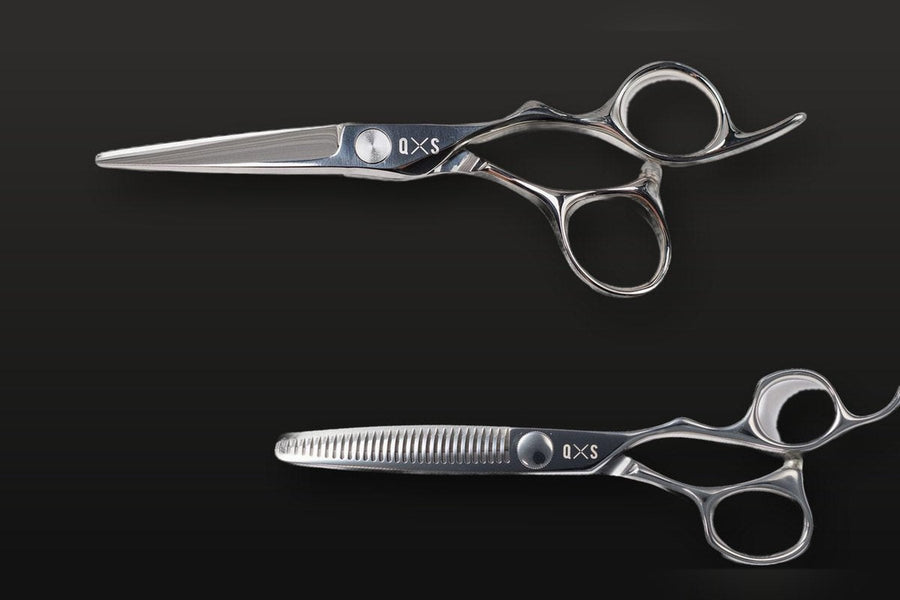
- For the top: The Cabot reverse thinner, with 30 large, tight-gapped teeth for controlled debulking of thick and coarse hair — or the Vespucci Flip for finer refining.
The hairdresser’s kit
Hairdressing rewards versatility and comfort. You need a shear that will slide cleanly through wet hair at 10am and still feel light at 6pm.
- The everyday cutter: The Hillary (ultra-lightweight, sculpted offset) or The Polo (modern classic offset), both full convex in 5.5″ or 6.0″.
- For dry cutting and strong lines: The Dias in 6.0″ or 6.5″, with an extended comfort pad on the thumb ring.
- For weight without the line: The Vespucci — 30 fully sharpened teeth and a blunted solid blade for soft, invisible blending.
The best barbers I know own a hairdresser’s shear. The best hairdressers I know own a barber’s. Technique doesn’t care what the sign above the door says.
Where the line blurs
Short, textured cuts, shags, mullets, soft crops — today’s chairs don’t split neatly into “barber” and “salon”. If you work across both, an all-purpose 6.0″ like The Pizarro (offset, smaller finger rings, happy wet, blunt or point cutting) is the natural centre of the kit. Pair it with a blender and you can cover nearly anything that sits down in front of you.
If comfort is the problem
Barbers cut vertically more than most, which is exactly where a fixed thumb ring pushes the elbow up. A swivel handle lets the thumb ring rotate so the elbow stays down. If your shoulder aches after a busy day, try the Polo Swivel or Dias Swivel.
Build it as a pair
Buying cutter and thinner together means they’re matched in feel and steel — and it’s better value. The Pro Duo (Polo + Vespucci) is our favourite all-rounder for either chair; the Foundation Duo is the best-value way in. See all of them in Bundles & Kits.
Questions we get asked
Can a barber use a hairdressing shear?
Of course. Many barbers use a 5.5″ or 6.0″ convex shear for everything above the parietal ridge and keep a shorter or longer blade for detail and scissor-over-comb.
What length is best for scissor-over-comb?
Longer is easier: 6.5″ to 7.0″ lets the blade run along the comb in one pass. The Columbus was built for exactly that.
Do barbers need a thinner?
Most do. A reverse thinner like the Cabot or Vespucci Flip keeps the solid blade facing you, which many barbers find more natural for texturising the top.
Dan Wild · Founder, Quartered Steels · Belfast